Trauma-Informed Accountability, Repair & Safety Reflection
Accountability can be compassionate without avoiding responsibility.
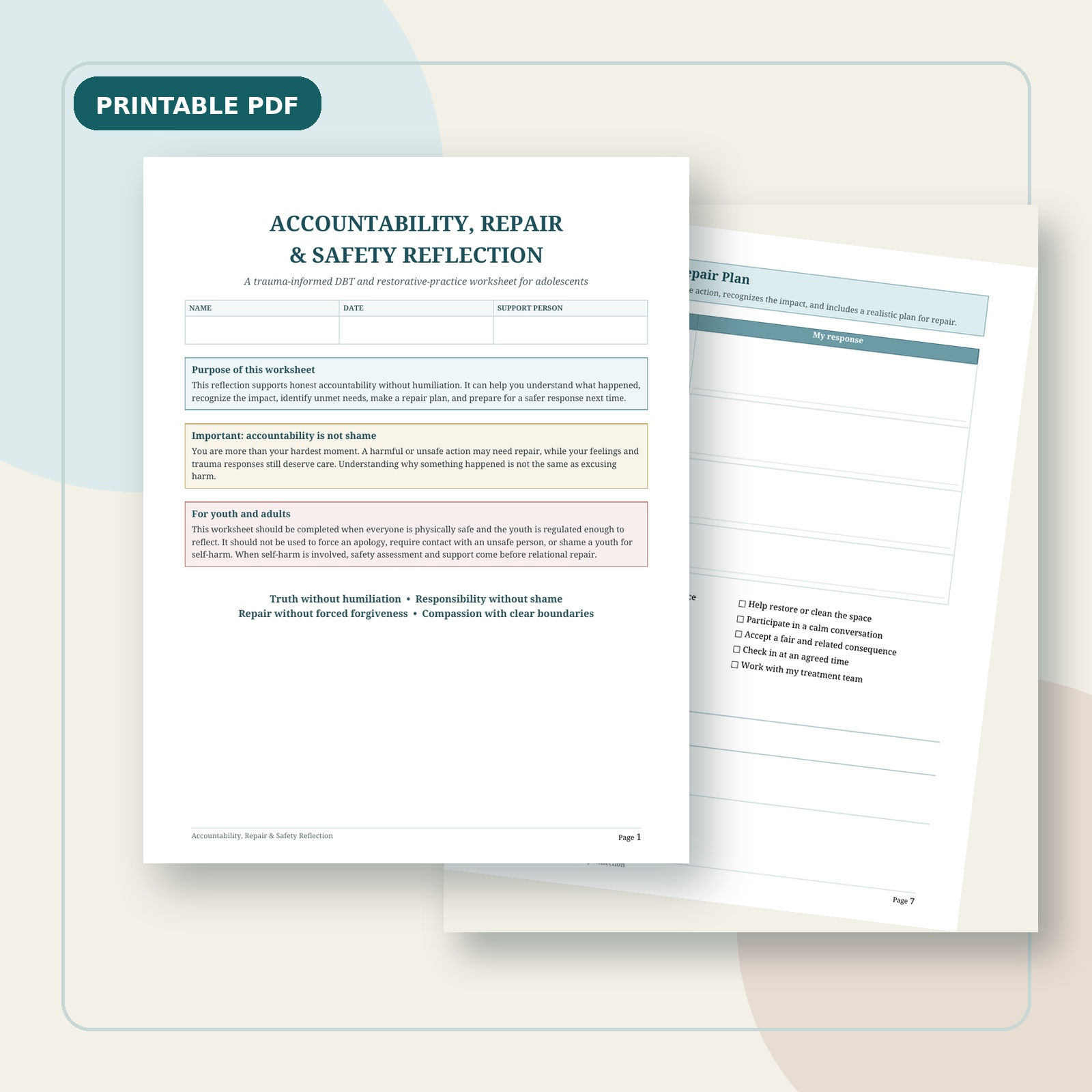
This trauma-informed reflection resource is designed to help you think more clearly about rupture, repair, boundaries, emotional safety, and what meaningful accountability can look like in real relationships.
Digital PDF • Instant download • No physical product shipped
Select Add to Cart to begin with this guided resource.
What You’ll Receive
An instant-access digital resource designed for self-paced reflection. Save it to your device and return to the exercises whenever you need them.
How to Use It
Move through the resource in order or start with the section that best matches what you are experiencing today. There is no requirement to finish it in one sitting.
Important Note
This resource is educational and reflective. It is not a substitute for medical care, diagnosis, psychotherapy, crisis services, or individualized professional treatment.
Full Workbook Details
Accountability can be compassionate without avoiding responsibility.
This trauma-informed reflection resource is designed to help you think more clearly about rupture, repair, boundaries, emotional safety, and what meaningful accountability can look like in real relationships.
Use it to explore:
what happened without collapsing into shame or defensiveness
the difference between intent, impact, and responsibility
what repair may realistically require
where boundaries or added safety may be needed
how to identify your own next step when trust has been strained
The goal is not to force reconciliation or excuse harmful behavior. It is to support thoughtful reflection around responsibility, repair, and safety.
Digital reflection resource • instant access • educational use only.
A Note From the Creator
I created this reflection resource because compassion and accountability should not be treated as opposites. My hope is that it helps you consider intent, impact, responsibility, repair, and safety with greater clarity—without forcing reconciliation or using shame as the price of change.
— Alizsha Ahlers, MS
Digital Delivery
This is a digital PDF download. Access is provided after purchase; no physical product will be shipped.